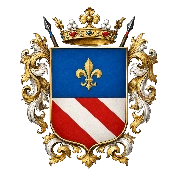
The House
Not a memory alone.
A living continuity.
A house is more than a family name, more than genealogy, and more than inherited form. It is a continuity of memory, responsibility, tone, judgment and lived presence. It remains worthy only when what it has received is carried forward with seriousness and made useful in the present.
Nature
Memory, duty and presence
Present form
Stewardship lived in the Netherlands

A first distinction
A house should not be confused with prestige. It is, above all, a form of continuity held together by conduct.
What is meant by a house
A house is a continuity of meaning before it is a structure of name.
A family house is not merely a lineage chart, a title, a collection of memories, or a set of inherited signs. It is the ongoing relationship between what has been received and how it is carried.
It includes memory, certainly, but also tone, conduct, responsibility, hospitality, judgment, standards of behaviour and the way in which the present generation interprets its obligations.
In this sense, the house is not static. It is a living moral form.
A necessary clarification
The house is not an exercise in nostalgia,
nor a theatre of identity.
It is not preserved in order to withdraw from the present, nor to exaggerate inherited form. It is preserved because continuity has value when it disciplines the present, gives proportion to life, and helps responsibility remain legible across generations.
The inner structure of the house
Four things must remain together.
Memory
What deserves to be remembered truthfully.
Duty
What must be carried with seriousness.
Hospitality
How the house becomes human, warm and open.
Transmission
What is left clearer, stronger and more worthy for those who come after.
When these four remain joined, the house remains alive. When they separate, it quickly becomes either sentiment without force or form without soul.
The present representation
The house is now carried by
Paolo Maria Pavan and Linda Pavan
In its present form, the house is represented by Paolo Maria Pavan, current Marquess of the House, and by Linda Pavan, Marchioness Consort. Their role is not ornamental. It is one of stewardship.
To represent the house is not merely to bear its name. It is to preserve its tone, to guard its standards, to order its continuity, and to decide how its inheritance should be lived in the present century.
This includes family life, correspondence, hospitality, patronage, culture, work, and the governance of those duties that give continuity a visible form.
Representation means
preserving without fossilising;
guiding without hardening;
receiving without display;
and carrying continuity into life rather than into abstraction.
The present location of the house
The house is lived in the Netherlands because that is where its present obligations are real.
The Netherlands is not a secondary setting added to a history formed elsewhere. It is the current centre of life, work, hospitality, reflection and stewardship. Here, continuity is not preserved from a distance. It is actively organised, interpreted and lived.
The house and the wider world
A house touches other lives by the way it conducts itself.
Through example, hospitality, guidance, patronage, work and judgment, a house inevitably affects the world around it. For that reason, continuity has worth only when it becomes a source of clarity, seriousness, encouragement and human usefulness rather than mere inherited form.
The life of the house
A house is also made visible
through atmosphere
Quiet life
The house is not only represented in formal terms. It is also lived through conversation, silence, books, work, affection, meals, correspondence, routines and those forms of domestic truth that give continuity its human scale.
This is why the Chancellery, the collection, hospitality and the presence of family life all belong to the meaning of the house.
Culture and welcome
A house reveals itself through what it receives and how it receives it: people, works of art, letters, conversations, younger generations, makers, guests and responsibilities.
In that sense, atmosphere is not superficial. It is one of the deepest truths of continuity.
Stewardship
The house remains worthy only if what it has received becomes useful beyond itself.
For this house, stewardship means placing continuity in the service of guidance, seriousness, hospitality, cultural life, encouragement, structural clarity and better conditions for those who come after. Inheritance is therefore not a privilege to be displayed, but a task to be carried.
Closing statement
A house is not kept alive by remembering it.
It is kept alive by living it truthfully.
This is the sense in which the House of Pavan Galeffi understands itself today: not as a monument to what has been, but as a disciplined continuity of memory, duty, welcome, culture and responsible presence in the world.
Final note
The house is present wherever continuity is carried with conscience.
Its roots matter. Its symbols matter. Its memory matters. But none of these remain sufficient unless the present generation gives them truthful form.
That is the work of the house now.