Art and Collection
The collection
of the house.
A house does not express itself only through its history, its work, or its sense of continuity. It also expresses itself through what it chooses to recognise, to welcome, and to live alongside. Within the life of this house, art belongs to that realm.
Collection
Relationship, patronage and stewardship
Public approach
Artists named, works kept private

A living orientation
This collection is not conceived as a display of possession, but as part of a broader way of inhabiting the world: with attention to beauty, respect for makers, and openness to the meeting of creation, thought and lived experience.
Statement
The collection is shaped by relationship.
Art belongs to the life of this house not as ornament, and not as accumulation, but as a way of giving space to vision, sensitivity, courage and human presence.
The collection gathered over time by Paolo Maria Pavan and Linda Maria Pavan is best understood not simply as a body of objects, but as a field of affinities: between generations, between disciplines, between memory and experiment, between hospitality and discernment.
It speaks not only of what this house preserves, but of what it values.
Legacy
A legacy of patronage
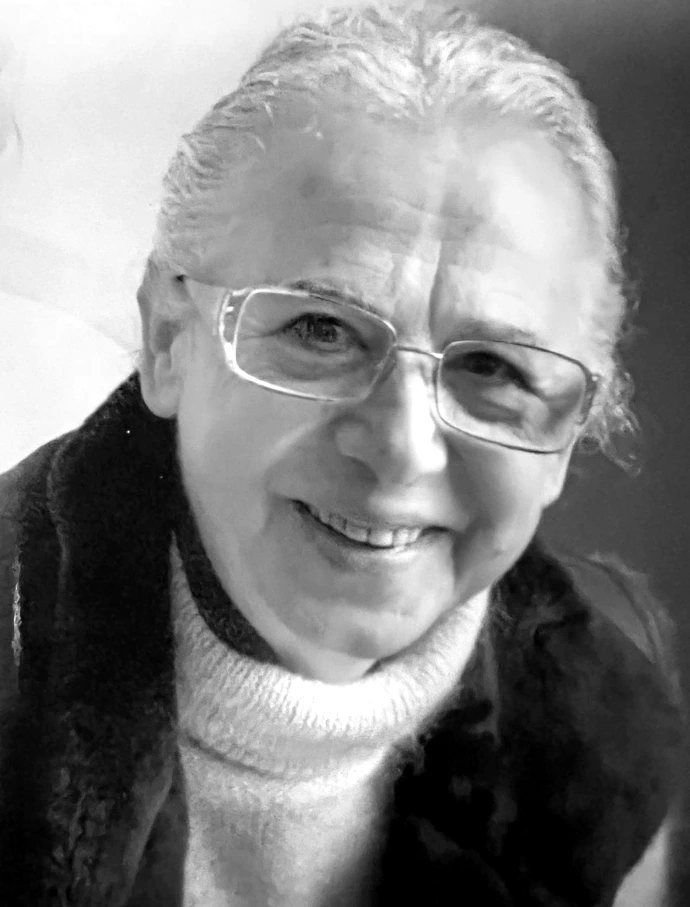
Margherita Galeffi Michetti Zucconi
The house remembers patronage as a living responsibility.
This dimension of the house has deep roots. It is closely linked to a passion that belonged in a particular way to Paolo Maria’s mother, Margherita Galeffi Michetti Zucconi, whose life expressed a true and active form of patronage.
Her support for the arts, and especially for women artists and female entrepreneurs, was not only aesthetic. It was personal, practical and often courageous. She understood that talent does not flourish through admiration alone, but through encouragement, trust and the willingness to create real space for others to be seen and taken seriously.
That legacy is not remembered here as a sentimental detail, but as a living orientation: the conviction that art deserves not only appreciation, but also advocacy, and that those still building their voice often need not applause first, but recognition, dignity and a setting in which their work may be encountered with seriousness.
Future development
A patronage programme in her honour
This page is designed to host, in due course, a dedicated patronage initiative inspired by the example of Margherita Galeffi Michetti Zucconi. The future programme will honour her spirit by supporting artistic seriousness, emerging voices, and especially women whose creative work and entrepreneurial force deserve meaningful recognition.
The meaning of the collection
The collection of the house should not be understood simply as a body of objects.
It is more accurate to think of it as a field of affinities: between generations, between disciplines, between memory and experiment, between hospitality and discernment.
It speaks of what this house values.
What this house values
Work shaped by conviction.
Beauty with depth.
Artistic courage without theatricality.
The seriousness of those who make, often before the world has fully recognised them.
The possibility that a house may still serve, quietly but truly, as a place where culture is not consumed, but received and shared.
Artists in the collection
A place for the names behind the works
Future register
A public record of artists,
not of works
In time, this page will host a carefully maintained list of artists whose works form part of the house collection.
The intention is to recognise makers with seriousness and gratitude, while maintaining the discretion appropriate to a private house collection.
For reasons of privacy, security and insurance, individual works are not displayed publicly here.
Artists represented in the collection
Lucio Fontana
Marino Marini
Stefano Molinari
Laura Benetton
Giuseppe Cavalli
Mario Giacomelli
Fausto Melotti
Umberto Boccioni,
And many Others
Privacy and stewardship
A private collection can still be
publicly serious.
The house may honour artists without exposing the works themselves. This page therefore privileges names, relationships, patronage and cultural intention over visual inventory. Discretion, in this context, is not secrecy. It is part of responsible stewardship.
Closing note
A house does not honour art merely by collecting it.
It honours art by recognising the lives behind it, by making room for what is still emerging, and by allowing beauty, intelligence and risk to enter the everyday atmosphere of its rooms.
In that spirit, the collection of Paolo Maria Pavan and Linda Maria Pavan, and the hospitality with which it is shared through the life of the house and the Chancellery, continue a legacy shaped by memory, patronage and the conviction that encouragement, too, is a form of stewardship.